Maintaining a property involves a myriad of tasks that ensure its safety, functionality, and aesthetic appeal. One often overlooked aspect of routine property maintenance is storm drain cleaning. Surprisingly, the condition of storm drains directly affects the structural integrity and safety of a property.
Without regular maintenance, storm drains can become clogged, leading to various issues such as water damage, flooding, and increased repair costs. This article delves into the necessity of storm drain maintenance, offering insights to property owners seeking to preserve the longevity and safety of their assets.
What is Storm Drain Cleaning and Why is it Important?
Storm drain cleaning involves the removal of debris such as leaves, dirt, and litter that may accumulate in drainage systems. These systems are designed to efficiently manage water runoff, preventing floods and minimizing erosion. When storm drains become clogged, water can overflow and cause significant damage to both the property and the surrounding environment. Regular cleaning ensures that the drains perform optimally, facilitating the smooth flow of water and reducing the likelihood of blockages. Ultimately, storm drain maintenance is crucial for preserving the structural health and value of a property.
Beyond preventing physical damages, routine storm drain cleaning is also important from a financial perspective. Unattended blockages can lead to costly repairs resulting from water damage to building foundations, walkways, and landscaping. Additionally, managing water efficiently helps avoid potential environmental penalties and government fines associated with improper water discharge. Furthermore, regular maintenance contributes to the aesthetic quality of the property, ensuring that landscaping and exterior components appear clean and well-kept. By preemptively addressing potential drainage issues, property owners can save money and maintain a pristine, professional appearance.
How Often Should Storm Drains be Cleaned?
The frequency of storm drain cleaning largely depends on several critical factors including the local climate, surrounding vegetation, and recent weather conditions. In areas with heavy foliage or frequent storms, drains may require more regular attention to prevent blockages caused by accumulating debris. Generally, property owners should aim to clean their storm drains at least twice a year, ideally before and after the rainy season. This regular schedule ensures that systems are ready to handle increased water flow and mitigates potential hazards before they arise. By tailoring the maintenance schedule to the property’s specific needs, owners can effectively manage risks and ensure drainage reliability.
What are the Consequences of Neglecting Storm Drain Maintenance?
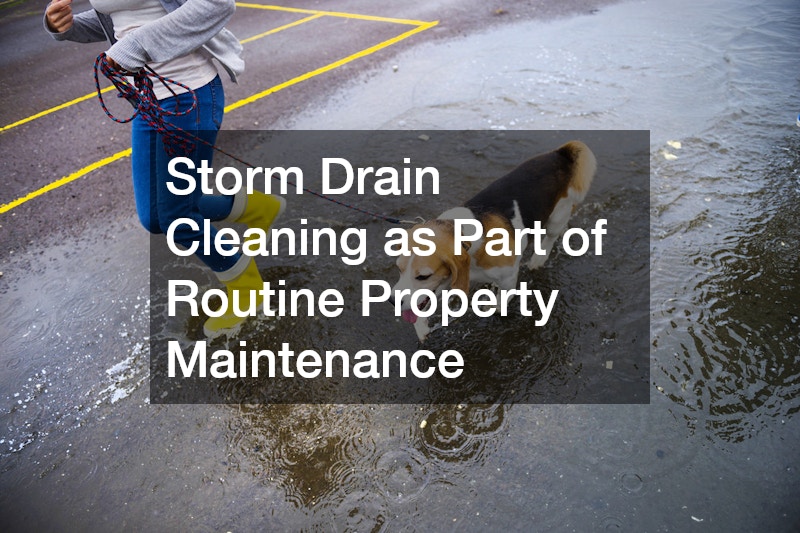
Neglecting storm drain maintenance can lead to severe and often costly consequences. One of the most immediate risks is flooding, where blocked drains are unable to efficiently redirect rainwater, leading to water pooling around the property. This water accumulation can infiltrate building foundations, causing structural damage and weakening the integrity of sidewalks and driveways. Long-term exposure to water also promotes mold growth, further degrading building materials and posing health risks. Thus, timely and regular storm drain cleaning acts as a preventative measure, safeguarding both the property’s infrastructure and its inhabitants.
Aside from physical damage, poorly maintained storm drains can negatively impact the surrounding community and environment. Overflowing drains can erode soil, washing away valuable topsoil and damaging landscaping. Furthermore, runoff water from blocked drains often carries pollutants such as oil, pesticides, and waste into local waterways, compromising water quality. This contamination leads to ecological harm affecting local plants and wildlife, disrupting the balance of natural ecosystems. By ensuring that storm drains are routinely cleaned and cleared, property owners contribute positively to their communities and uphold environmental standards.
What Techniques are Used for Effective Storm Drain Cleaning?
The effectiveness of storm drain cleaning heavily relies on employing the right techniques and tools. One commonly used approach is jet washing, which utilizes high-pressure water jets to dislodge and remove debris from the drainage system. This method proves particularly useful for clearing blockages caused by sediment buildup or organic matter. Additionally, mechanical rodding involves using flexible rods to break apart and extract stubborn blockages. Both techniques work to ensure that drainage paths are clear, restoring their ability to properly manage water runoff and reduce flooding risks.
How Can Property Owners Ensure Proper Storm Drain Maintenance?
Ensuring proper storm drain maintenance begins with adopting a proactive and informed approach. Property owners should first familiarize themselves with the design and layout of their drainage systems to identify potential problem areas. Regular inspection routines help recognize signs of blockages or damage early on, facilitating timely interventions. Collaborating with professional cleaning services proves beneficial for accessing specialized equipment and expertise. By staying informed and engaged with the maintenance process, property owners can catch issues before they escalate, extending the lifespan of their drainage systems.
Regular storm drain cleaning is vital to maintaining the structural integrity and environmental quality of a property. The understanding and implementation of effective maintenance techniques protect against flooding, preserve property aesthetics, and uphold ecological standards. By recognizing the significance of storm drains within the broader context of property management, owners can make informed decisions that benefit both the property and the surrounding community. Routine inspections, timely interventions, and adopting preventative measures form a comprehensive approach to storm drain care. Property owners are encouraged to prioritize this often-overlooked aspect of maintenance, ensuring the longstanding protection and value of their assets.